
The War's Changing Scale
Another Day of LifeThis flow traces a conflict that begins as fragmented factional fighting and becomes an international war of regular forces and heavy weapons.
increasing Bearing strength in each event
 decreasing
Bearing strength in each eventdecreasingRival Movements
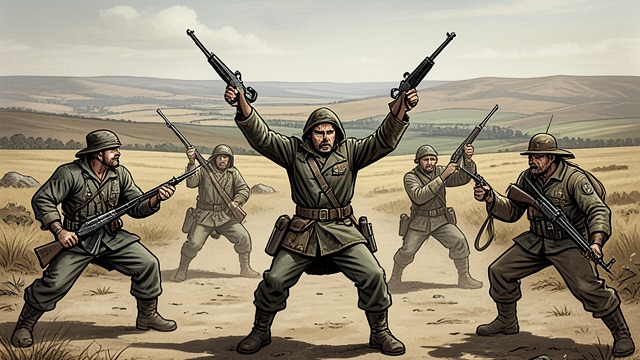
Rival Movements
Independence and division
The end of Portuguese rule does not unite Angola's armed movements. The MPLA, FNLA, and UNITA compete for power, each supported by different outside interests and shaped by regional or political loyalties.
A civil war takes shape
As agreements unravel and fighting spreads, former partners become enemies. The conflict grows from contested political authority into a struggle that affects civilians, soldiers, and the future of the whole country.
Foreign Forces Enter
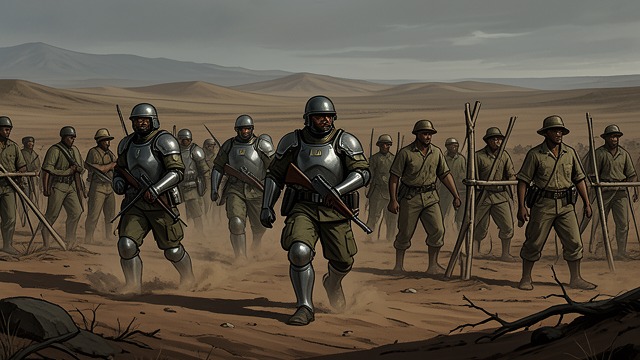
Foreign Forces Enter
A local war widens
South African forces move into Angola while support from Zaïre strengthens the FNLA. The conflict is no longer simply a contest among Angolan organizations: neighboring states and foreign military interests now shape the battlefield.
Unequal capacity
At the southern front, thinly equipped MPLA units face a better supplied force with armored vehicles. The widening imbalance makes local courage insufficient to stop an advance by itself.
From Guerrillas to Armies
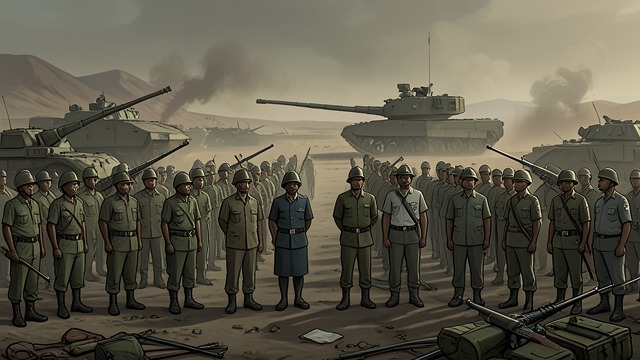
From Guerrillas to Armies
Heavy equipment changes the war
The South African intervention shifts the fighting toward regular armies, artillery, and armor. The MPLA now has to build coordinated defenses rather than rely only on small units and guerrilla experience.
The struggle continues
Cuban military support and growing Angolan forces help make resistance possible, but independence brings no immediate peace. The war expands beyond the moments witnessed in Luanda and continues for decades.
Summer 1975
August to October 1975
November 1975
